

Leaders of ministries and institutions of Belarus and Karelia had talks on cooperation relating to economy, agriculture, healthcare, tourism, and science, and signed a number of important agreements.
One of the main areas of mutual interest is scientific cooperation. Olga Bakhmet is a member of the Inter-Academy Council of the Russian Academy of Sciences and the National Academy of Sciences of Belarus. The cornerstone document for developing the interactions is the Agreement on Scientific Cooperation between KarRC RAS and the National Academy of Sciences of Belarus, dated December 12, 2018.
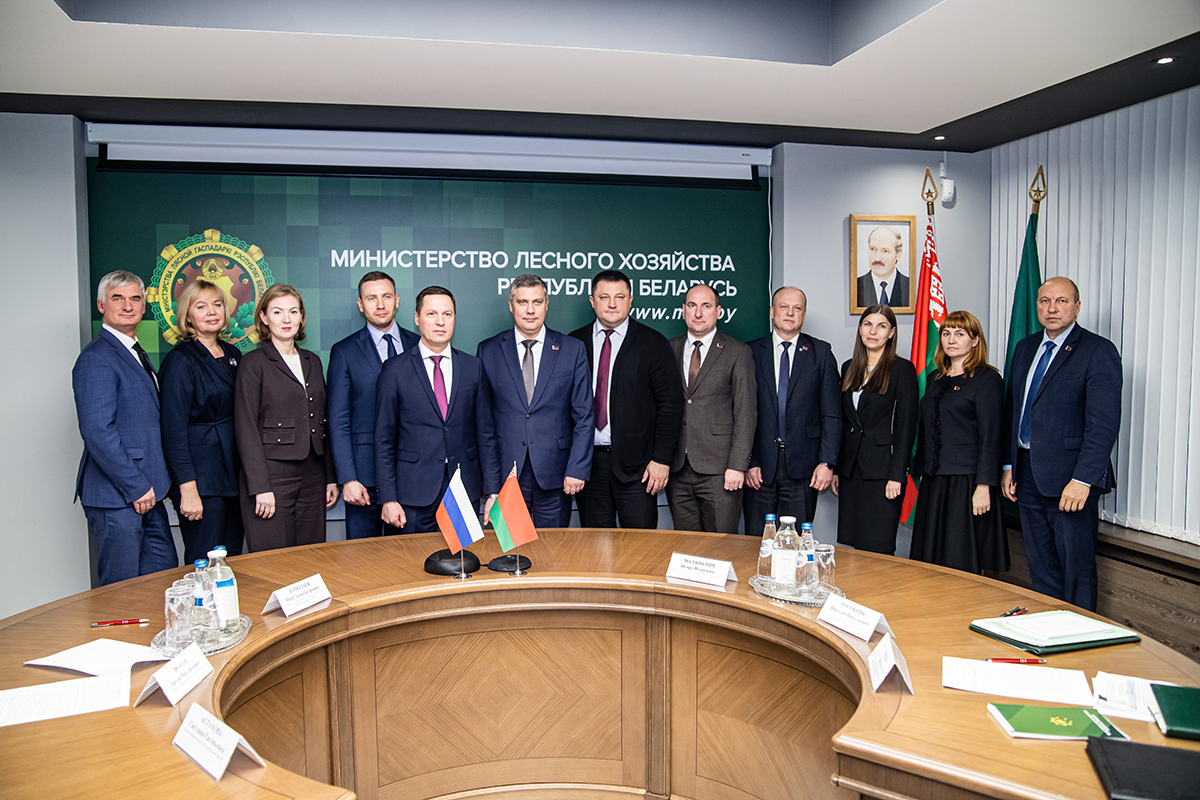
Karelian delegation at a meeting at the Republic of Belarus Ministry of Forestry
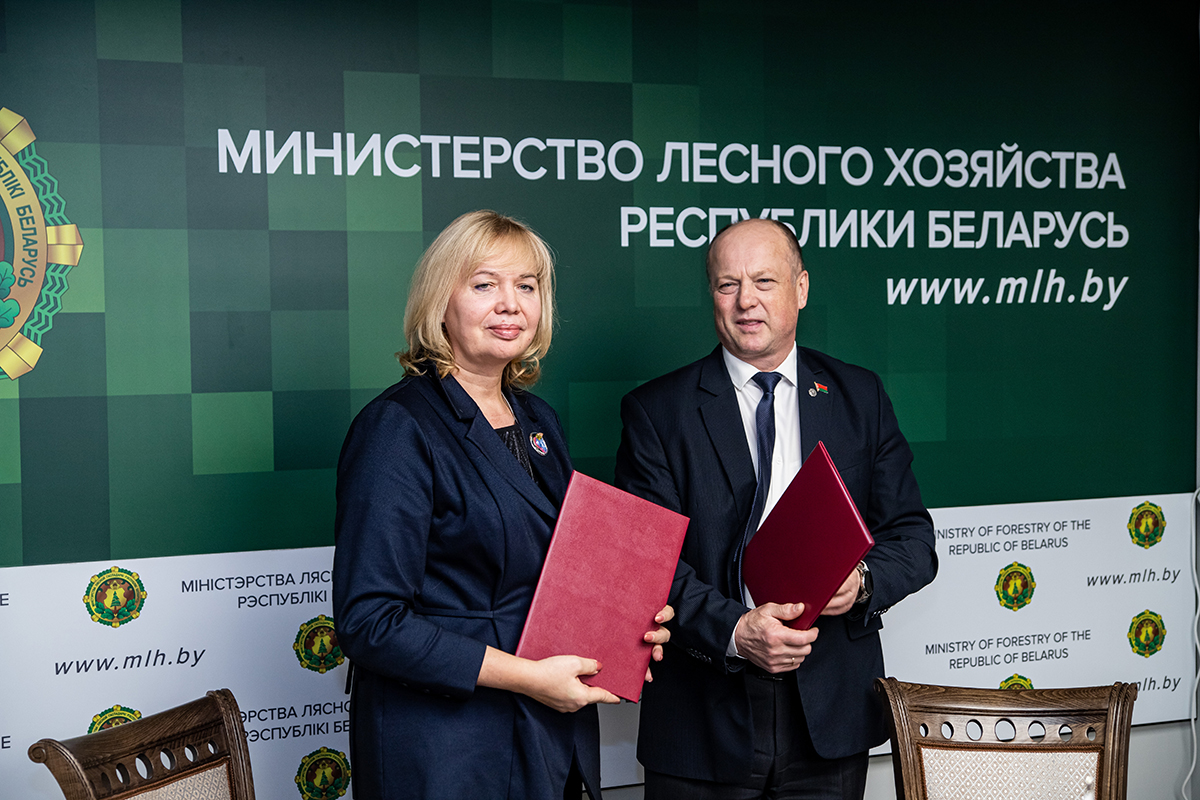
In the course of the past years, ten agreements have been concluded between KarRC RAS and organizations within the system of the National Academy of Sciences of Belarus. At the November 20th meeting of the Working Group on Developing Cooperation between the Republic of Belarus and the Republic of Karelia two major documents were signed: Action plan for developing Karelia-Belarus cooperation 2026 – 2028, and a Cooperation Agreement between the Karelian Research Centre RAS and the Belarusian Republican Forest Breeding and Seed Production Center (RBSPC). It sets out the key lines for cooperation between scientists of Belarus and Karelia in the sphere of forest species breeding and seed production. The RBSPC participates in state programs for the conservation of the valuable gene pool of woody plants and augmenting the productivity, ecological and resource potential of Belarusian forests.
– This center specializes in the reproduction of woody plants and has thoroughly elaborated process chains. It is important for our Belarusian colleagues to test the real-life performance of these solutions in the more northern conditions of Karelia, leveraging the expertise and many years of experience of KarRC RAS’s scientists. We, on the other hand, are also interested in trying out their developments. The work will commence in the spring, as soon as the new field season begins, – informed KarRC RAS leader.
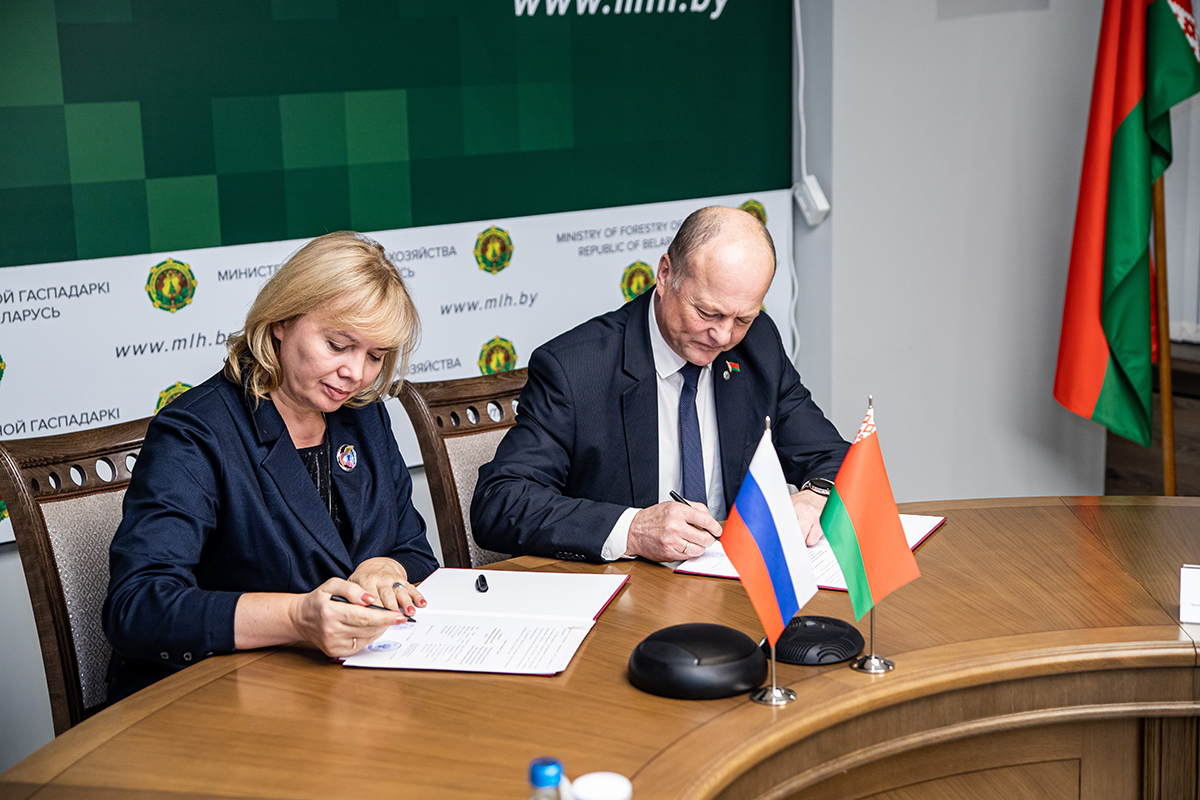
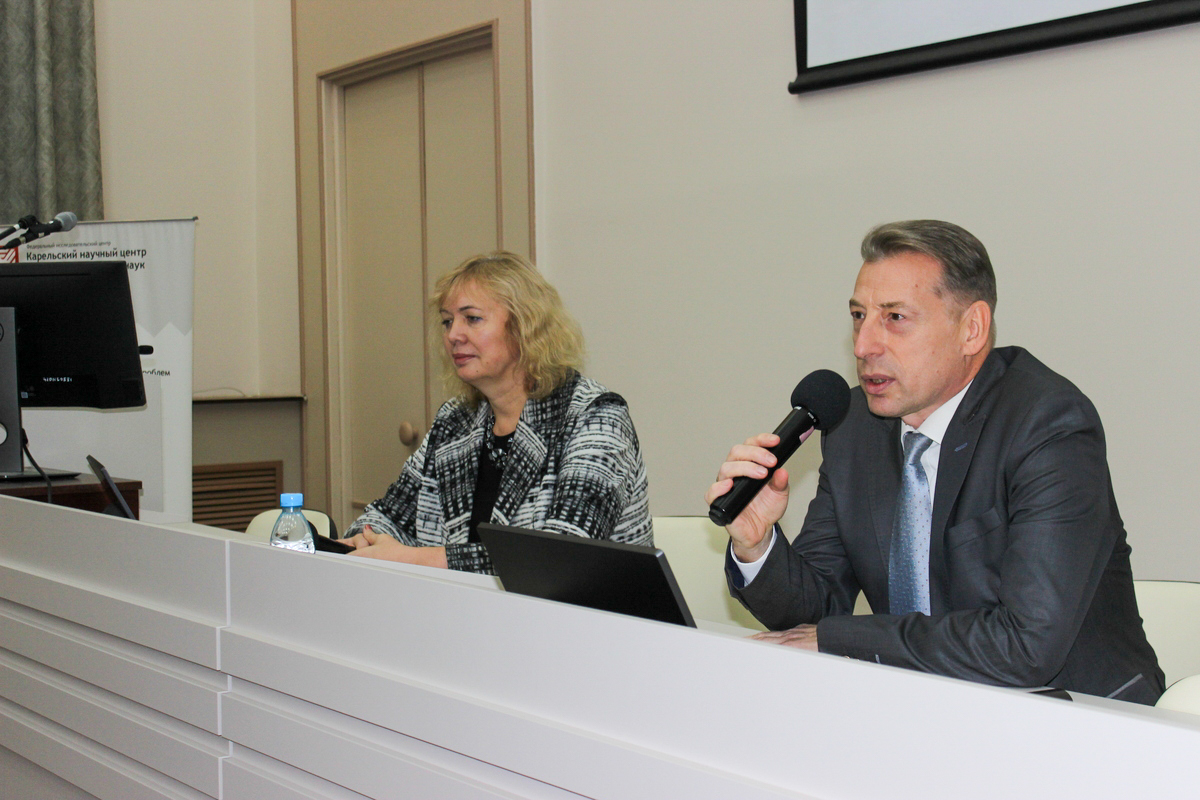
KarRC RAS CEO Olga Bakhmet and Director of the Republican Forest Breeding and Seed Production Centre (Belarus) Valentin Shatravko
In addition, Olga Bakhmet had meetings at the National Academy of Sciences of Belarus.
– My mission was to establish new and support existing scientific ties. We promptly came to a mutual understanding with our colleagues. The main issue is fund-raising for our joint projects. We do get support from the Russian Science Foundation, but we’d like to get more funding from the Standing Committee of the Union State. This will be our joint target. After a recent change of the leadership and some specialists at the National Academy of Sciences of Belarus, it was very important to meet the people who would be willing to support and continue cooperation with Karelian scientists. We’re speaking here of certain specific projects for which we will try to secure funding. They are concerned with agriculture and aquaculture – matters of high relevance for us and advancing successfully in Belarus, – explained KarRC RAS leader Olga Bakhmet.
Karelia and Belarus are actively developing mutually beneficial cooperation. By the end of 2024, the volume of exports from Karelia had grown by 29.3% in monetary terms, to five times the level of 2020. The main products our republic supplies to Belarus are paper, cardboard, lumber, fire robots, and stone products.
Photos: Media Office of the Republic of Belarus Forestry Ministry